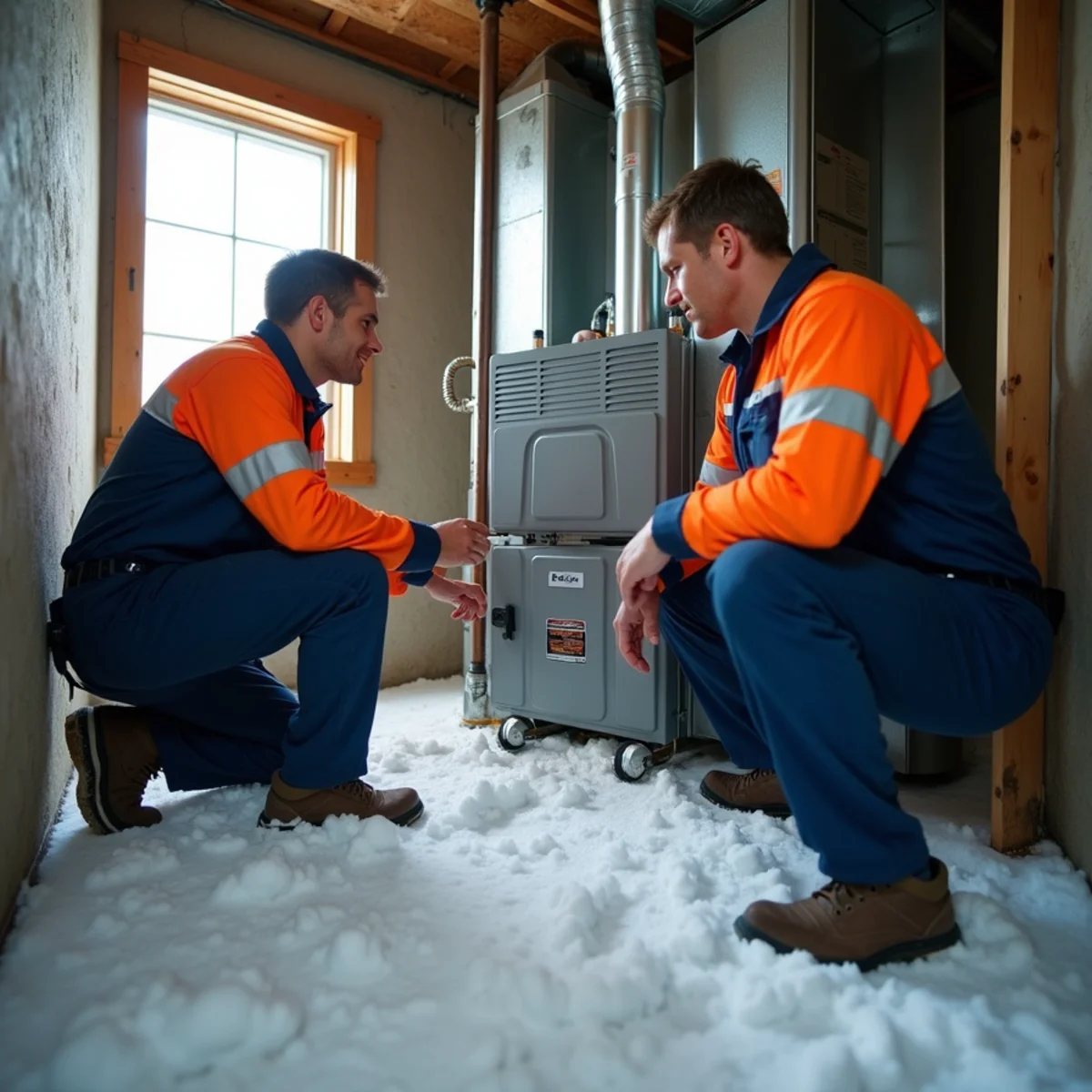
Why Is My AC Leaking Water? Causes and How to Fix It

A puddle under your air conditioner usually traces back to a handful of common causes. Here's what's happening, what you can safely check, and when to call a technician.
Finding water around your indoor air handler or dripping from a ceiling vent is unsettling — your AC is supposed to remove moisture, not spill it. A small amount of condensation is normal, but standing water or an active drip points to a problem. Left alone, it can warp flooring, stain drywall, and feed mold. Here's what causes an AC to leak water, what you can safely check yourself, and when it's time to call a technician.
How Your AC Is Supposed to Handle Water
As warm, humid air passes over the cold evaporator coil, moisture condenses on the coil and drips into a drain pan below. From there it flows out through the condensate drain line — usually a white PVC pipe — to a floor drain, a utility sink, or outside. When any part of that path clogs, cracks, or freezes, the water has nowhere to go but onto your floor.
The Most Common Causes of an AC Water Leak
Most leaks come down to one of these:
- Clogged condensate drain line: The number one cause. Algae, dust, and slime build up inside the drain line and back the water up into the pan until it overflows.
- Dirty air filter: A clogged filter restricts airflow across the coil, letting it get cold enough to freeze. When the ice melts, it overwhelms the drain pan.
- Frozen evaporator coil thawing: Low airflow or low refrigerant can freeze the coil into a block of ice. As it thaws, the runoff exceeds what the pan can hold.
- Cracked or rusted drain pan: On older systems the pan corrodes or cracks and simply can't hold water anymore.
- Failed condensate pump: Systems that pump water upward or sideways rely on a small pump. When it fails, water collects instead of draining.
- Low refrigerant: Low charge drops the coil temperature below freezing, leading to the same freeze-and-thaw overflow — and it signals a leak that needs a pro.
- Improper installation or a sloped unit: A pan or drain line that isn't pitched correctly keeps water from flowing out the way it should.
What You Can Safely Check Yourself
A few of these you can rule out without any special tools:
- 1Turn the system off at the thermostat to stop producing more water and limit the mess.
- 2Replace the air filter if it's dirty — this is the single most common fixable cause and protects the coil.
- 3Look for ice on the refrigerant lines or indoor unit. If you see frost, leave the system off and let it thaw fully; running it will only make more water.
- 4Check the drain pan for standing water and the drain line's exit point to see whether anything is draining at all.
- 5If your system has a float switch and the unit won't turn on, that safety is doing its job — it shut things down because the pan filled up.
When a Frozen Coil Is Behind the Leak
If the water is coming from a coil that froze and thawed, the leak is a symptom, not the root problem. Restricted airflow or low refrigerant is the real cause, and it will freeze again until it's addressed. Our guide to a frozen AC coil walks through why it happens and how to thaw it safely. If the coil keeps icing up after a filter change, that usually means a refrigerant leak that calls for professional AC repair.
When to Call a Pro
Clearing a stubborn drain line, fixing a cracked pan, replacing a condensate pump, or correcting low refrigerant are jobs for a licensed technician. Refrigerant work in particular is regulated and requires proper equipment — it's never a DIY fix. If the water is reaching drywall, flooring, or a ceiling, treat it as urgent to avoid lasting damage and mold. P&Y's AC not cooling service finds the real source fast, and we serve homeowners across Rockville and Montgomery County. Call (831) 461-3437 for a diagnostic.
Preventing the Next Leak
Most condensate leaks trace back to skipped upkeep. Changing your filter on schedule and booking annual HVAC maintenance keeps the drain line clear, the coil clean, and the refrigerant charge where it belongs — so water drains the way it's meant to. P&Y is family-owned, licensed in Maryland (HVAC Master License #96254), and has kept Gaithersburg and Montgomery County homes comfortable for over a decade. Call (831) 461-3437 to schedule a tune-up.
Need Help From a Local Pro?
P&Y Heating and Cooling is here 24/7 for Montgomery County. Call for fast, licensed service and a free estimate.
Call (831) 461-3437