Why Is My AC Making Noise? Common Sounds and What They Mean
A noisy air conditioner is trying to tell you something. Here's what buzzing, banging, humming, squealing, clicking, and rattling usually mean — and when to call a pro.
Air conditioners are never silent — a steady hum and the whoosh of air are normal. But a new or louder noise usually means a part is loose, worn, or failing, and catching it early often turns a small repair into exactly that instead of a breakdown on the hottest day of the year. Here's what the common sounds point to, what you can safely check yourself, and when it's time to call a technician.
Safety First: When to Shut It Off
If you hear loud grinding, metal-on-metal scraping, or you smell burning or hot electrical insulation, don't keep running the system to see if it stops. Turn the air conditioner off at the thermostat, then shut off power at the breaker for both the indoor and outdoor units. Running a unit through a grinding or burning-smell fault can turn a repairable problem into a destroyed compressor or an electrical hazard. Leave the power off and call a pro.
Buzzing
A buzzing sound is usually electrical. A failing capacitor, a chattering contactor, loose wiring, or a motor struggling to start can all buzz. Sometimes it's just loose hardware or refrigerant piping vibrating against the cabinet. Because buzzing so often traces back to electrical components, it's best diagnosed with power safely isolated — the capacitor in particular stores a charge and is not a DIY part. You can check that the outdoor unit is clear of debris, but leave the electrical testing to a technician.
Humming
A soft operating hum is normal. A loud, persistent hum — especially when the outdoor fan or compressor won't actually start — commonly points to a weak or failed capacitor or a contactor that isn't closing properly. The motor is getting power but can't get moving. This is a frequent and usually affordable repair, but it needs the right parts and a meter, not a homeowner guess.
Banging or Clanking
Banging and clanking mean something is loose or broken and knocking around. Inside the outdoor unit it can be a loose fan blade, a failing fan or blower motor mount, debris that fell into the cabinet, or — more seriously — a loose or failing part inside the compressor. If the noise is rhythmic and tied to the unit running, shut it off and have it looked at before a small part damages something expensive.
Clicking
A click or two at startup and shutdown is normal — that's relays and controls doing their job. Constant or rapid clicking is not. It can signal a failing thermostat, a control-board relay issue, or a contactor that keeps trying to engage. If your system clicks repeatedly but won't start cooling, that's a diagnostic worth a service call rather than something to ignore. Our guide for when the AC runs but won't cool covers related symptoms.
Squealing
A high-pitched squeal usually comes from the blower or fan motor. On older systems with a belt-driven blower, a worn or slipping belt squeals and should be replaced. On most modern systems, squealing points to failing motor bearings. Either way, the fix is a part replacement by a technician — ignoring worn bearings eventually seizes the motor.
Rattling
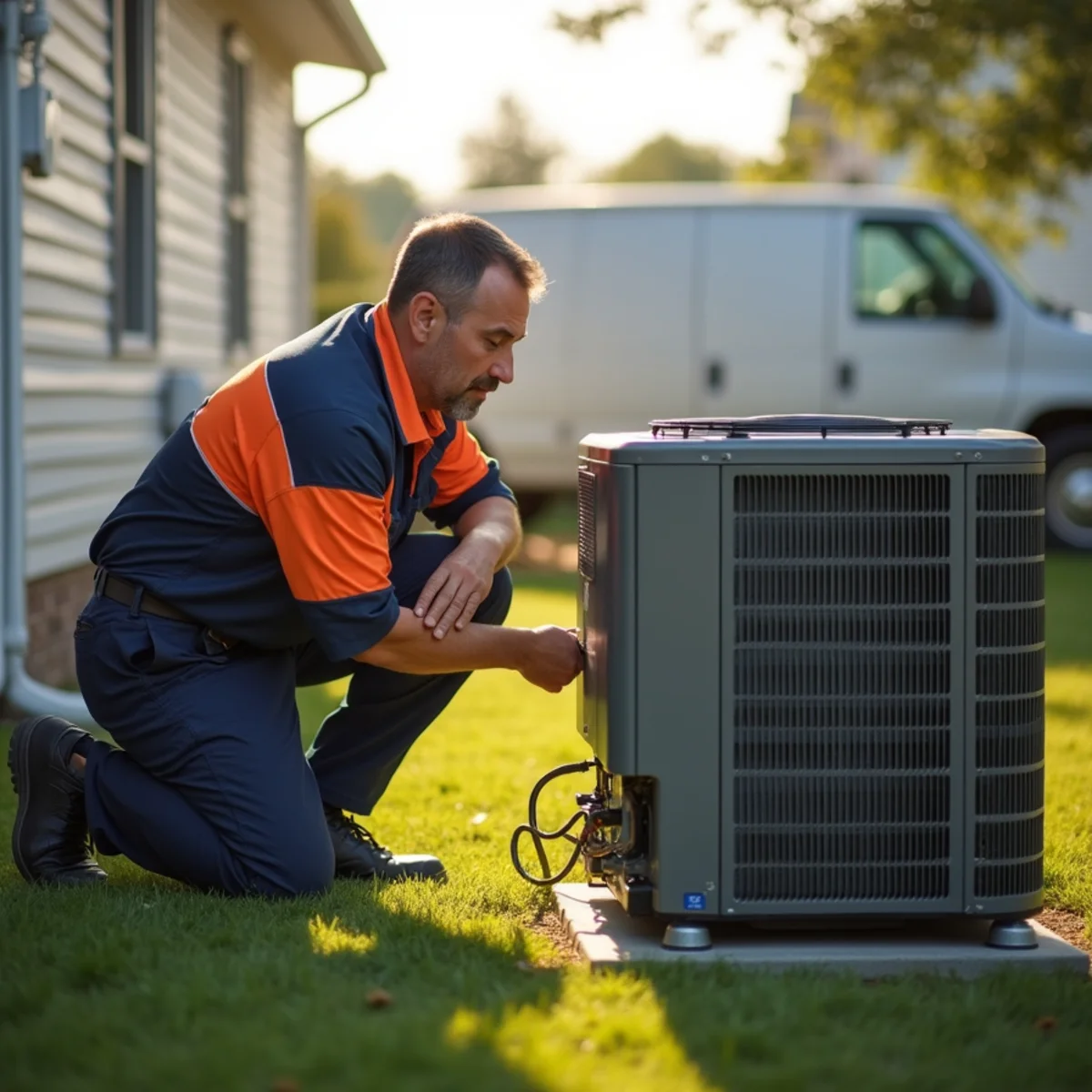
Rattling is often the easiest to track down. Twigs, leaves, or small debris in the outdoor unit, a loose access panel, or missing screws will all rattle. A homeowner can safely power the unit down, clear debris from around and inside the top grille, and make sure the service panels are seated. If the cabinet is clear and tight but the rattle continues, the cause is likely a loosening internal component that a technician should secure.
What You Can Safely Check Yourself
- Clear leaves, grass clippings, and debris from around the outdoor unit so airflow isn't blocked.
- Make sure access panels are in place and screws are snug.
- Replace a clogged air filter — restricted airflow can make the system work harder and louder.
- Confirm the thermostat is set correctly and its batteries are fresh.
- Stop there — do not open electrical compartments, touch the capacitor, or probe wiring. Those carry shock risk and need a pro.
When to Call P&Y
If the noise is electrical, mechanical, or you've shut the system down for safety, it's time for a licensed technician. P&Y is a family-owned company led by master technician Pedro Alcantara (Maryland HVAC Master License #96254), serving Gaithersburg and Montgomery County for over a decade with 24/7 service. Our AC repair team diagnoses the sound, shows you the worn part, and fixes it right — and routine HVAC maintenance catches many of these noises before they start. Serving Rockville and all of Montgomery County, we're a call away at (831) 461-3437.
Need Help From a Local Pro?
P&Y Heating and Cooling is here 24/7 for Montgomery County. Call for fast, licensed service and a free estimate.
Call (831) 461-3437